NMU Mathematics Seminar
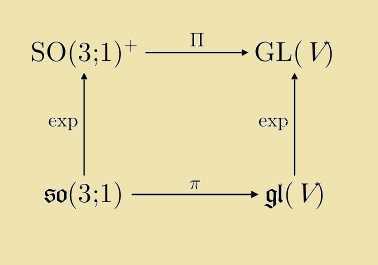 author: fresh_42 (CC BY-SA 4.0) : link
Summer 2026 - Seminar on Riemann Surfaces and Moduli Spaces
Location:
Thursdays, 12-1pm, JXJ 2311
References:
Talks (2-7): Tristan Needham, Visual Complex Analysis.
Talks (1-8): Farkas and Kra, Riemann Surfaces.
Talks (3-8): Miranda, Algebraic Curves and Riemann Surfaces.
Talks (2-7): Ahlfors, Complex Analysis.
Talk (9): Wright, From Rational Billiards to Dynamics on Moduli Spaces.
Talk (9): Zorich, Flat Surfaces.
- (Talk 1 - May 28) D. Rowe: Abelian Integrals and the History of Riemann Surfaces
Motivating Question and Some Homework Problems:
Why do some natural geometric quantities (like the length of an ellipse) resist expression in terms of familiar functions, and what does that failure mean?
1. Show that the unit circle admits a rational parametrization.
2. Derive the arc length integral for an ellipse.
3. Perform a trig subsitution and transform the integral.
4. Explain why a cubic curve does not admit a rational parametrization.
- (Talk 2 - June 4) H. Hannula: Holomorphic Functions and Analytic Continuation
Motivating Question and Some Homework Problems:
What makes complex differentiability so rigid, and why does it force functions to extend beyond their original domains?
1. Show that if a complex function is differentiable, it satisfies the Cauchy Riemann equations.
2. Give an example of a function that is real-differentiable but not holomorphic.
3. Show that analytic continuation along different paths can produce different values for ln(z).
4. Explain why sqrt(z) cannot be defined continously on C*.
- (Talk 3 - June 11) J. Thompson: Riemann Surfaces, Coverings, Monodromy
Motivating Question and Some Homework Problems:
How can we build a space on which multi-valued functions become single-valued?
1. Construct the two-sheeted surface for sqrt(z).
2. Show that a loop around 0 swaps the two sheets.
3. Describe the monodromy action for sqrt(z).
4. Do the same thing for z1/n.
5. Explain why monodromy is a group homomorphism.
- (Talk 4 - June 25) D. Rowe: Topological Classification of Surfaces
Motivating Question and Some Homework Problems:
What does a surface look like up to continuous deformation, and how can we classify all possibilities?
1. Compute the Euler characteristic of a sphere, torus, and double torus.
2. Show that identifying opposite sides of a square produces a torus.
3. Draw a genus-2 surface and describe its fundamental cycles.
4. Explain why adding a handle decreases Euler characteristic by 2.
5. Argue that genus is a topological invariant.
- (Talk 5 - July 2) D. Rowe: Complex Structures on Surfaces
Motivating Question and Some Homework Problems:
How many different ways can we put a complex structure on the same topological surface?
1. What are the possible complex structures on the sphere? the torus?
2. Give two different lattices that produce non-isomorphic tori.
3. Explain why a complex structure is stronger than a topological structure.
- (Talk 6 - TBD) Speaker TBD: Moduli Problems (Triangles, Tori, Surfaces, etc.)
Motivating Question and Some Homework Problems:
What does it mean to classify all shapes of a given type, and how can that classification itself form a geometric space?
1. Show that scaling a lattice does not change the complex structure.
2. Describe the moduli space of triangles as a subset of R2.
3. Explain why the tori for tau and tau+1 are equivalent.
4. Give an example of a moduli problem in a different context (not surfaces).
- (Talk 7 - TBD) Speaker TBD: The Appearance of Hyperbolic Geometry
Motivating Question and Some Homework Problems:
Why does negative curvature naturally appear on most surfaces, and how does it unify geometry and topology?
1. Verify that straight lines in the Poincare disk model are arcs orthogonal to the boundary.
2. Compare angle sums of triangles in Euclidean vs hyperbolic geometry.
3. Explain why genus 2 and greater suggests more space than Euclidean geometry allows.
4. State the uniformization theorem in your own words.
- (Talk 8 - TBD Speaker TBD: Teichmuller Space and Mapping Class Groups
Motivating Question and Some Homework Problems:
How can we study all geometric structures on a surface by first remembering extra data and then quotienting it out?
1. Define a marked surface and explain why marking removes ambiguity.
2. Give an example of a mapping class (e.g., Dehn twist).
3. Explain why moduli space is a quotient of Teichmuller space.
4. Why is Teichmuller space easier to study than moduli space?
- (Talk 9 - TBD) Speaker TBD: Dynamics on Moduli Spaces
Motivating Question and Some Homework Problems:
What happens when we let geometry evolve? What kinds of motion and patterns emerge on moduli spaces?
1. Describe how a billiard trajectory in a polygon can be unfolded into straight-line motion.
2. Explain how a translation surface arises from polygon gluing.
3. What does it mean for a flow to be ergodic (informally)?
4. Describe qualitatively how geodesics move in moduli space.
5. Give an example of a dynamical system arising from geometry.
Fall 2025, Winter 2026
- (Oct 3) D. Rowe: What is a Gauge Symmetry?
- (Oct 31) D. Rowe: Convolutions, Characters, and Fourier Duality
- (Apr 17) D. Rowe: Heron's Formula
Summer 2025
- (May 21) D. Rowe: Reciprocity Laws and Representations - Part 1
- (May 28) D. Rowe: Reciprocity Laws and Representations - Part 2
- (Jun 4) D. Rowe: Reciprocity Laws and Representations - Part 3
- (Jun 11) J.D. Phillips: Nonassociative Algebra - Part 1
- (Jun 18) J.D. Phillips: Nonassociative Algebra - Part 2
- (Jun 25) J.D. Phillips: Nonassociative Algebra - Part 3
- (Jul 2) no seminar this week
- (Jul 9) Hunter Hannula: Mod p Pascal Triangle and Quasiperiodic Functions
- (Jul 16) D. Rowe: Nonassociative Representation Theory
- (Jul 23) Hunter Hannula: Hypermagmas and Hypergroups
- (Jul 30) Hunter Hannula: Hypergroups and Polyloops
Summer 2024
- (June 12) D. Rowe: Spin Representations of som(C)
- (June 26) D. Rowe: Nonassociative algebra and Projective Geometry
Winter 2024
- (Feb 2) D. Rowe: Quasigroup and Loop Congruences
- (Feb 9) D. Rowe: Normal Subloops, Moufang Loops, Nuclei, Centralizers
- (Feb 16) J.D. Phillips: Normality in Loops, Central Series
- (Feb 23) E. Phillips: Background of C(L) normality in Moufang Loops
- (Mar 1) no seminar: friday before March break
- (Mar 15) R. White: Moufang Loops and Graph Theory
- (Mar 22) S. Mulholland: Theorems concerning subloops
notes on nonassociative algebra and Lie theory
- notes from winter 2024
- notes from Rowe's nonassociative algebra class (winter 2023)
- notes from seminar (fall 2019)
- notes from seminar (winter 2020)
some papers in nonassociative algebra
Varieties of Loops and Nonassociative Rings
- Phillips, Vojtechkovsky: The Varieties of Loops of Bol-Moufang Type [link]
- Hemmila, Phillips, Rowe, White: The Varieties of Rings of Bol-Moufang Type [link]
- Hemmila, Phillips, Rowe, White: Commutative and 2-Divisible Subvarieties of Rings of Bol-Moufang Type [link]
Tangent Algebras of Loops
- Mikheev: Commutator Algebras of Right Alternative Algebras [link]
- Akivis, Goldberg: Local Algebras of a Differential Quasigroup [link]
- Nagy: Moufang Loops and Malcev Algebras [link]
- Bremner, Madariaga: Polynomial Identities for Tangent Algebras of Monoassociative Loops [link]
- Mostovoy, Perez-Izquierdo, Sheskatov: Hopf Algebras in Non-Associative Lie Theory [link]
The Matrix Exponential
- Haber: Notes on the Matrix Exponential and Logarithm [link]
Winter 2021
- (Feb 3) Erik Flinn: Quasigroups, Isotopies, Parastrophes
- (Feb 10) J.D. Phillips: The Lie of Bol-Moufang: The Final Chapter
- (Feb 15) Dan Rowe: Lie Groups and Lie Algebras, Part 1
- (Feb 22) Josh Thompson: 3-Webs: What I Learned in a Week
- (Mar 1) Dan Rowe: Lie Groups and Lie Algebras, Part 2
- (Mar 8) Josiah Schmidt: Computability Theory
- (Mar 15) Chad Leisenring: March Mathness
- (Apr 5) Dan Rowe: Tangent Algebras to Lie Loops (Akivis Algebras)