Cantor and His Resisters
How Kronecker, Weierstrass, and Dedekind Responded to the Actual Infinite
Why This Story Matters
In the 1870s a young mathematician at a second-tier university proved that some infinities are strictly larger than others. The reaction of the men who had trained him, edited the journals, and controlled the best jobs in German mathematics ranged from private unease to open hostility. This document sets out, person by person, what each of them actually did. It is also an honest account of where the historical record is thin, because the popular version of this story (Cantor the lone genius, Kronecker the villain) is cleaner than the evidence.
The pattern is the one this unit keeps returning to. An established community defends a framework (here, mathematics built only from finite constructions), and a result that does not fit gets resisted through gatekeeping, delay, and ridicule long before it gets refuted. Compare the fate of the perceptron after Minsky and Papert, or Kuhn’s account of how anomalies are absorbed until they cannot be.
The Cast at a Glance
| Dates | Base | Stance toward Cantor | |
|---|---|---|---|
| Georg Cantor | 1845-1918 | Halle | Proposed that infinite sets come in different sizes |
| Leopold Kronecker | 1823-1891 | Berlin | Active, lifelong opposition on principle |
| Karl Weierstrass | 1815-1897 | Berlin | Cantor’s teacher and patron; supportive in action, uneasy about the ideas |
| Richard Dedekind | 1831-1916 | Braunschweig | Friend and collaborator; accepted the actual infinite; the relationship was nonetheless strained |
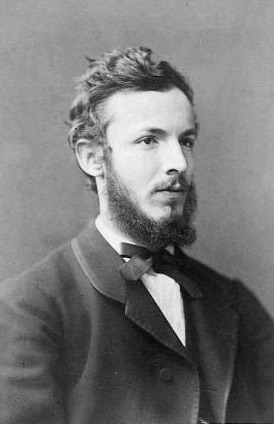
Leopold Kronecker: Resistance on Principle
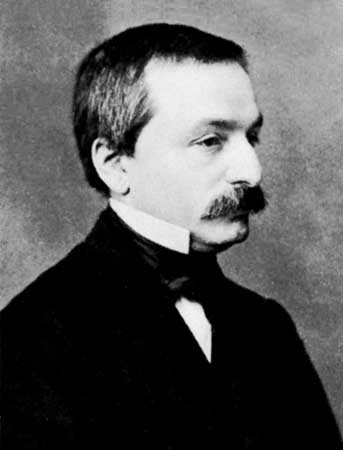
The philosophy behind the opposition
Kronecker was a finitist-constructivist. He accepted a mathematical object only if it could be built from the natural numbers in finitely many steps. By that standard, a “completed” infinite set, the real numbers as a finished totality, an uncountable collection, a hierarchy of infinities, were not mathematics at all. His attitude is summed up in a remark reported after his death by Heinrich Weber (1893): God made the integers, and everything else is human work. He voiced constructive objections to infinitary methods as early as about 1870, and after 1872 he aimed them at the set-theoretic definitions of the real numbers offered by Dedekind and Cantor.
This matters for how we read the conflict. Kronecker was not merely envious or territorial, though personal friction was real. He held a coherent view of what counts as a legitimate mathematical object, and Cantor’s diagonal argument, which proves that a collection exists by showing every attempted list of it must fail, sits squarely on the wrong side of that line.
What he actually did
- A pattern of editorial interference (1870). Kronecker sat on the editorial board of Crelle’s Journal (the leading German mathematics journal). Four years before Cantor’s breakthrough, Heine wrote that Kronecker had tried to dissuade him from publishing a paper on trigonometric series and had delayed it. Heine’s paper did eventually appear.
- The 1874 paper and its disguised title. Cantor’s first paper on uncountability appeared as On a Property of the Collection of All Real Algebraic Numbers. The title announces the countability of the algebraic numbers and hides the headline result, that the real numbers are uncountable. Historians connect this to Kronecker (Cantor himself wrote to Dedekind that “conditions in Berlin” had made the exposition restrained), but note that the claim that the title was a deliberate dodge is an inference, not a documented fact. Weierstrass’s advice also played a role (see below).
- The 1877-78 dimension paper. Cantor had shown that the points of a line can be matched one-to-one with the points of a square, or of n-dimensional space. He submitted the paper to Crelle’s in July 1877. Kronecker’s opposition delayed it, Cantor considered withdrawing it, and it appeared in 1878. Cantor never submitted to Crelle’s again.
- Personal attacks. Kronecker is reported to have called Cantor a “scientific charlatan,” a “renegade,” and a “corrupter of youth.” These words reach us through Schoenflies’s 1927 account, not from Kronecker’s own writing, so treat the exact wording as secondhand.
- Closing the door on Berlin. Cantor wanted a chair at Berlin, the leading university. Berlin appointments usually involved Kronecker, and each of Cantor’s attempts failed. Cantor came to believe he would never leave Halle.
- The 1884 threat. In a letter of 26 January 1884, Cantor told Mittag-Leffler that Kronecker was preparing an article arguing that the results of modern function theory and set theory had no real significance. The article, as far as the sources show, never appeared.
- The Lindemann remark. After Lindemann proved in 1882 that pi is transcendental, Kronecker is reported to have asked what use such a result could be, since irrational numbers do not exist. This is a paraphrase, and the date is uncertain (a remark of 1882 in some accounts, a lecture of 1886 in another).
Aftermath
Cantor suffered his first documented breakdown in May 1884. All 52 letters he wrote to Mittag-Leffler that year mentioned Kronecker. The traditional account ties the breakdown to Kronecker’s attacks and to Cantor’s failure to prove the Continuum Hypothesis. More recent scholarship, including Grattan-Guinness, doubts that mathematics was the main cause, and some have suggested bipolar disorder. The sources do not settle the question. Cantor later sought a reconciliation with Kronecker; the philosophical disagreement remained. Kronecker died on 29 December 1891.
Karl Weierstrass: The Ambivalent Patron
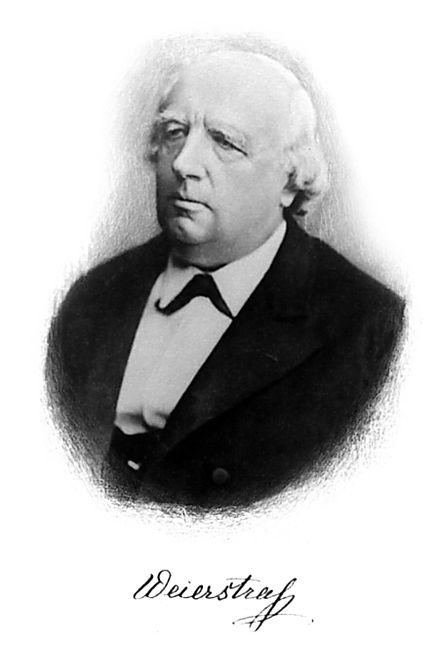
Weierstrass is a harder case than Kronecker, and it would be a mistake to file him under “obstructionist.” The evidence shows a teacher who helped Cantor in practice while remaining uneasy about where the ideas led.
What he gave Cantor. Cantor was a student at Berlin and attended Weierstrass’s seminar. Cantor’s 1872 construction of the real numbers via sequences simplified Weierstrass’s own lecture definition, and his derived sets rest on Weierstrass’s limit-point concept. Cantor used one-to-one correspondences in the seminar to show that the rationals and the natural numbers are equivalent.
December 1873. Cantor showed Weierstrass his proof that the real numbers cannot be listed, at the end of the month in Berlin. Weierstrass was impressed, but his real interest was the countability of the algebraic numbers. Cantor did not want to publish yet. Weierstrass urged him to publish at least the algebraic-number results, and, according to one account, advised leaving the uncountability theorem out of the submitted paper (it could be added as a marginal note in proof). That advice, together with the Kronecker problem, is the likeliest explanation for the paper’s muted title.
Where he held back. The Stanford Encyclopedia of Philosophy notes that Weierstrass, at least in 1874, had objections to distinguishing sizes of infinity despite Cantor’s proofs. Another account says he seems not to have accepted at first that two infinite sets could differ so radically, and that he later changed his mind. We do not have a detailed statement of his objections, and several of the sources are silent on his reaction to the 1880s work on transfinite numbers.
1878. When Cantor wanted to withdraw the dimension paper, Weierstrass supported publishing it despite Kronecker’s objections.
Collateral damage. Kronecker opposed the Berlin analysis school, including the Bolzano-Weierstrass theorem, and Cantor later said Kronecker’s hostility extended to “Weierstrassian analysis.” Part of what Cantor ran into was a factional dispute within Berlin mathematics, and he was caught in it as one of Weierstrass’s students.
The honest summary: Weierstrass resisted the idea more quietly and more privately than Kronecker, and he did not use his influence against Cantor. If you present him as a resister in class, present him as a hesitant one.
Richard Dedekind: Friend, Collaborator, and a Strained Relationship
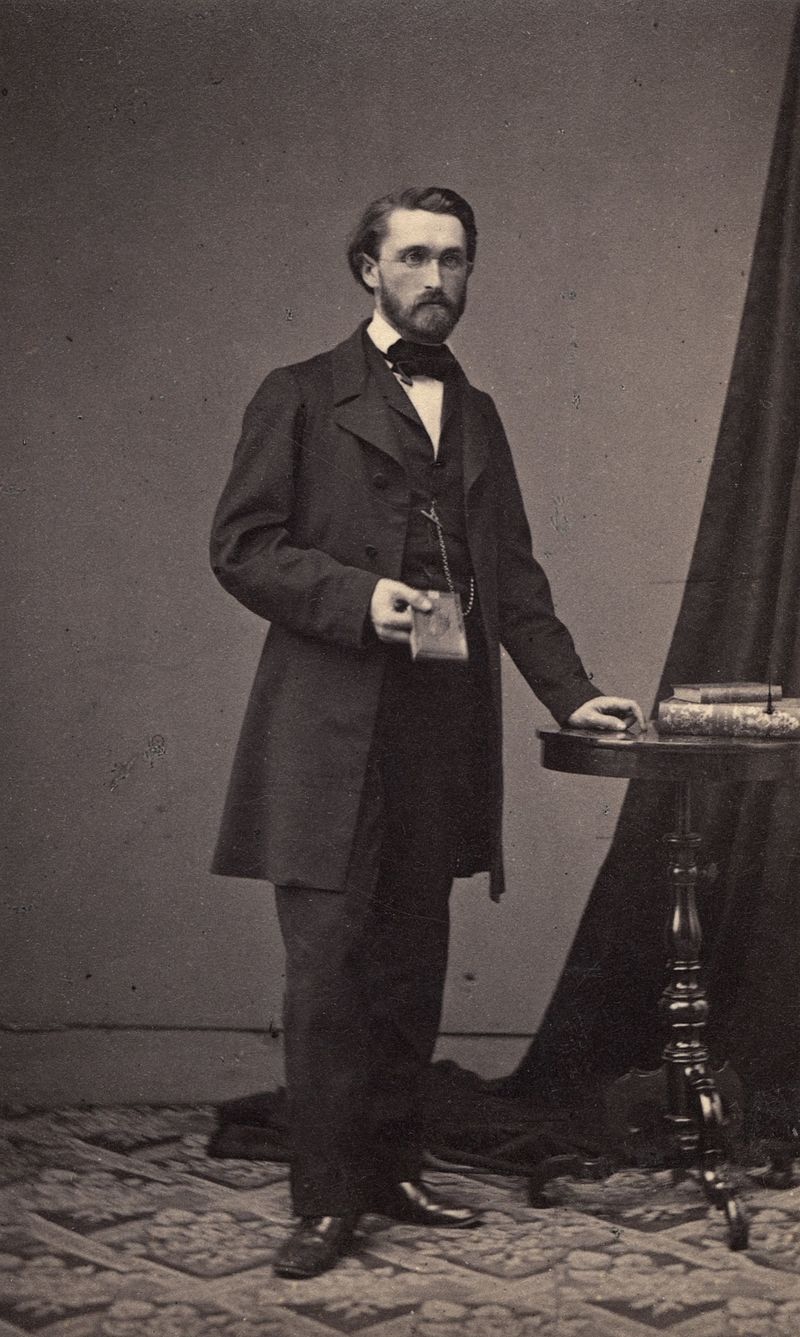
Dedekind did not resist Cantor’s ideas, so he belongs here as a contrast and as the person who shows how much of the work was collaborative. Cantor met him in Switzerland in 1872, and they became lifelong friends. That same year Dedekind published his construction of the real numbers by “cuts,” and he fully accepted the actual infinite. His 1888 book on the nature of numbers builds on it.
The 1873 letters. On 29 November 1873 Cantor asked Dedekind whether the positive integers and the positive reals could be put in one-to-one correspondence. Dedekind said the question did not deserve much effort. On 7 December Cantor sent a proof that no such correspondence exists, and Dedekind sent back a simplified version the next day. Dedekind also proved, independently, that the algebraic numbers are countable. The historian José Ferreirós calls this “Dedekind’s theorem.”
The credit problem. Cantor thanked Dedekind privately but did not mention his help in the published paper. Dedekind stopped replying, and the correspondence did not resume until October 1876.
The dimension result. In 1877, after finding the line-to-square correspondence, Cantor wrote to Dedekind, in French, that he saw it but did not believe it. Dedekind objected that the correspondence is not continuous, a point that mattered for the claim that dimension is a meaningful invariant. In 1878 he persuaded Cantor not to withdraw the paper from Crelle’s.
The later strain. Dedekind declined the Halle chair that opened when Heine died in 1881, and the correspondence appears to have ended in 1882, although the sources hedge on the connection. The two renewed their friendship around the 1897 Zürich congress. In 1899 Cantor criticized Dedekind’s “naive” assumption that every well-defined collection forms a consistent system, an early move toward the paradoxes of set theory.
Timeline
| Date | Event |
|---|---|
| 1870 | Kronecker delays Heine’s paper in Crelle’s |
| 1872 | Cantor meets Dedekind; Dedekind publishes cuts; Cantor publishes his construction of the reals |
| 29 Nov-9 Dec 1873 | Letters to Dedekind: the uncountability proof and its simplification |
| 23 Dec 1873 | Cantor discusses the results with Weierstrass |
| 1874 | Paper on the algebraic numbers appears in Crelle’s |
| Oct 1876 | Correspondence with Dedekind resumes |
| Jul 1877 | Dimension paper submitted to Crelle’s |
| 1878 | Paper published after delay; Dedekind and Weierstrass back publication |
| 1879 | Cantor becomes full professor at Halle |
| 1881-82 | Dedekind declines the Halle chair; the correspondence lapses |
| 26 Jan 1884 | Cantor reports Kronecker’s planned attack to Mittag-Leffler |
| May 1884 | Cantor’s first documented breakdown |
| 29 Dec 1891 | Kronecker dies |
| 1897 | Cantor and Dedekind renew contact |
| 6 Jan 1918 | Cantor dies in Halle |
What the Story Shows
Resistance rarely looks like refutation. Almost nothing Kronecker did was a rebuttal of a proof. He used editorial delay, personal contempt, and control of appointments. This is Kuhn’s point about normal science: a community defends its framework through its institutions before it ever has to answer the anomaly.
A real philosophical disagreement sat underneath. Kronecker’s constructive standard was not foolish, and a descendant of it, constructivist mathematics, is a living research area. The question he forced, whether proving that something must exist is the same as being able to build it, is still alive, and it is the same question that separates classical logic from computation.
Vindication took a generation. Hilbert, defending Cantor in 1926, said that no one shall expel us from the paradise Cantor created. Compare the half-century between Minsky and Papert’s 1969 book and the deep-learning revival. In both stories, an idea that the gatekeepers called unproductive later became foundational.
Discussion Questions
- Kronecker’s objection is partly philosophical and partly institutional. Which part do you think did more damage to Cantor, and could the first have existed without the second?
- Weierstrass helped Cantor publish yet doubted the result. Is quiet doubt from a supporter more or less harmful than open hostility? What would Kuhn say?
- Dedekind accepted Cantor’s infinities but still strained the friendship over credit. What does this say about how collaboration works at the edge of a paradigm?
- Where in today’s AI debates do you see a “Kronecker position”: a community accepting only results that can be built and checked step by step, and rejecting the opaque ones that merely work?
A Note on Sources
Where the sources disagree, I have said so. Dates for the dimension paper vary between accounts (submission in July 1877, publication in 1878). The Lindemann remark is dated differently in different accounts and is a paraphrase. Kronecker’s insults are secondhand. The claim that Cantor’s 1874 title was chosen to avoid Kronecker is an inference. Weierstrass’s views on unequal infinities are documented only thinly. The causes of Cantor’s 1884 breakdown are disputed.
- Joseph W. Dauben, Georg Cantor and the Battle for Transfinite Set Theory
- Cantor’s first set theory article (Wikipedia)
- Georg Cantor (Wikipedia)
- Set theory (MacTutor History of Mathematics)
- The Early Development of Set Theory (Stanford Encyclopedia of Philosophy)
- Georg Ferdinand Ludwig Philip Cantor (Encyclopedia.com)